











“Anchor charts are not wallpaper. They are a co-created resource and reference for children. Consider where you can display anchor charts in the classroom for students to use them as you learn together.” – Iysha Dent
If we’re honest, we’ve all seen (or made!) anchor charts that look beautiful but turn into background décor. The true power of an anchor chart isn’t in how pretty it looks, but in how it’s built with students and how often they use it. Research shows that co-created anchor charts strengthen comprehension, build independence, and give kids a visual they can return to when they need support (Fisher & Frey, 2014; Marzano, Pickering, & Pollock, 2001).
So How Do We Move From ‘Wallpaper’ to What Works for Children?
Plan with purpose.
Before the lesson, sketch a rough draft or at least think through the design of the anchor chart in relation to the genre or purpose of the text you’re reading. Decide what’s essential to include and keep it simple. Consider which visuals (icons, symbols, or purposeful color) will help students make meaning quickly, and plan space for student input. When it comes to color, be intentional. It should never be random or purely decorative; color should serve a clear purpose, supporting learning. Consistent colors can highlight patterns or categories so students see relationships at a glance. In contrast, a single accent color can draw attention to the most important part of the chart, such as the steps in a process or the big idea. A limited palette ensures color works as a cue rather than a distraction, and high-contrast choices improve accessibility for all learners.
Build it live.
Capture student language, examples, and connections in real time so they see their own thinking reflected on the wall. This makes the chart a shared record of learning rather than a teacher product. Anchor charts should emerge during instruction, not before, so students understand their purpose and take ownership. Keep your handwriting clear and legible, and avoid filling the chart with too much text at once. Students should be able to read and use it quickly. Students recognize their contributions, which increases the likelihood that they will become authentic learning tools during independent or partner work.
Keep it growing.
An anchor chart doesn’t have to be finished in one day or lesson. The benefit comes from continuously adding to it across a text or unit, making it an accurate living record of learning. When new vocabulary, strategies, or text evidence surface, add them right away so the chart grows alongside student understanding. This ongoing process keeps the chart relevant and prevents it from becoming “wallpaper.” Over time, students begin to see how their own learning accumulates. Each addition to the chart reflects their contributions, shows progress, connects back to prior lessons, and reinforces the big ideas of the module.
Use it daily.
Model how to refer back to charts during independent or partner work. When kids see you using the chart, they’ll start using it, too. Anchor charts only become useful if students know when and how to use them. Take time to point to the chart, reread key parts, or demonstrate how it can answer a question that comes up in the moment. When kids see you using the chart naturally in instruction, they begin to treat it as a real resource rather than a decoration. Encourage students to stand up and walk to the chart during work time if they need a reminder, or to reference it when talking with a partner. Anchor charts should be positioned for access and visibility, not tucked away in a corner, so that students can find and use them independently.
“Even better, put down your Mr. Sketch markers and let kids take the lead. Anchor charts will soon stop blending in and start standing out!” –Iysha Dent
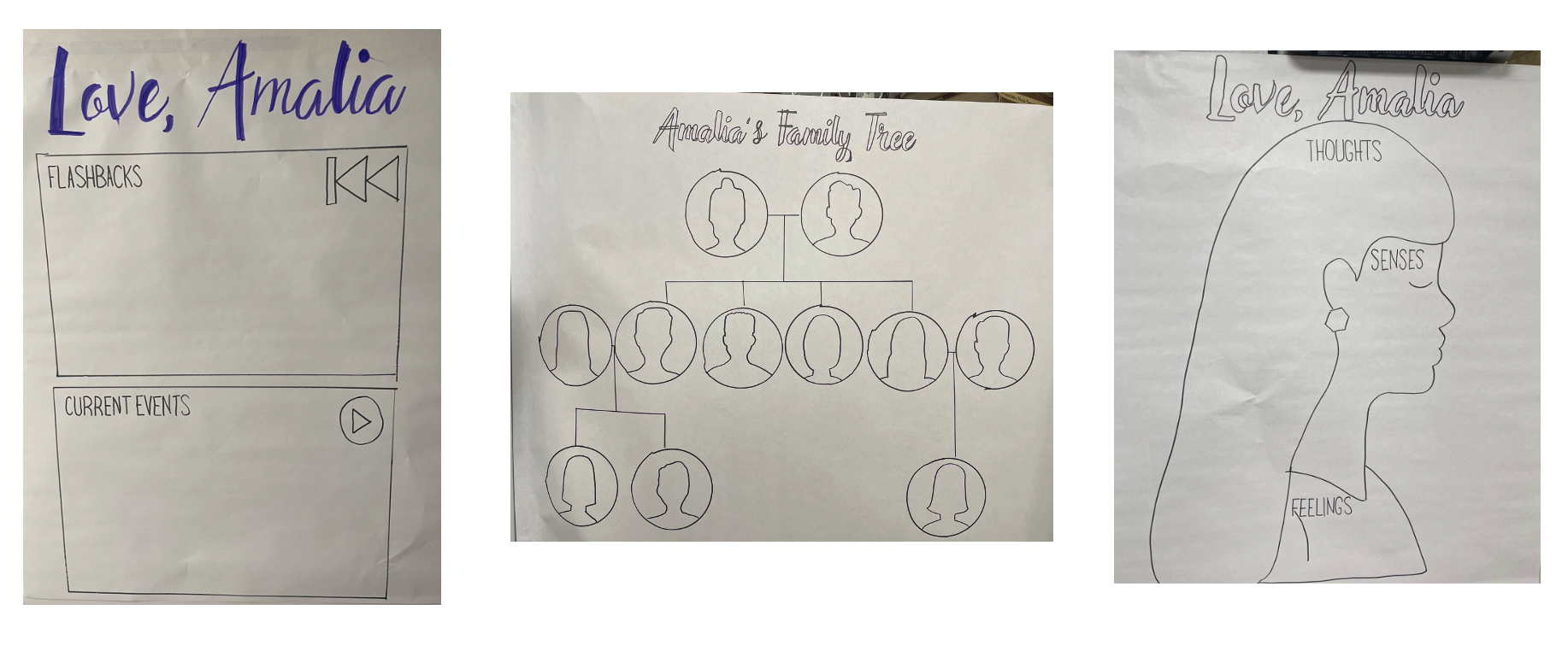
Love, Amalia Anchor Chart Example from Kristina Mullen (Grade 4)
References
CAST. (2018). Universal Design for Learning guidelines version 2.2. CAST. Retrieved from https://udlguidelines.cast.orgGoalbook. (n.d.).
Anchor charts. Goalbook Toolkit. Retrieved from https://goalbookapp.com/toolkit/v/strategy/anchor-charts
Fisher, D., & Frey, N. (2014). Better learning through structured teaching: A framework for the gradual release of responsibility (2nd ed.). ASCD.
Marzano, R. J., Pickering, D. J., & Pollock, J. E. (2001). Classroom instruction that works: Research-based strategies for increasing student achievement. ASCD.

Iysha Dent serves as a Sr. Literacy and Professional Learning Specialist at Open Up Resources. She supports educators and school leaders in implementing the OUR ELA curricula, ensuring access to high-quality curriculum, materials, and professional learning experiences. Driven by a passion for helping all students develop strong literacy skills, succeed, and discover joy in learning, Iysha is dedicated to making a lasting impact in classrooms.